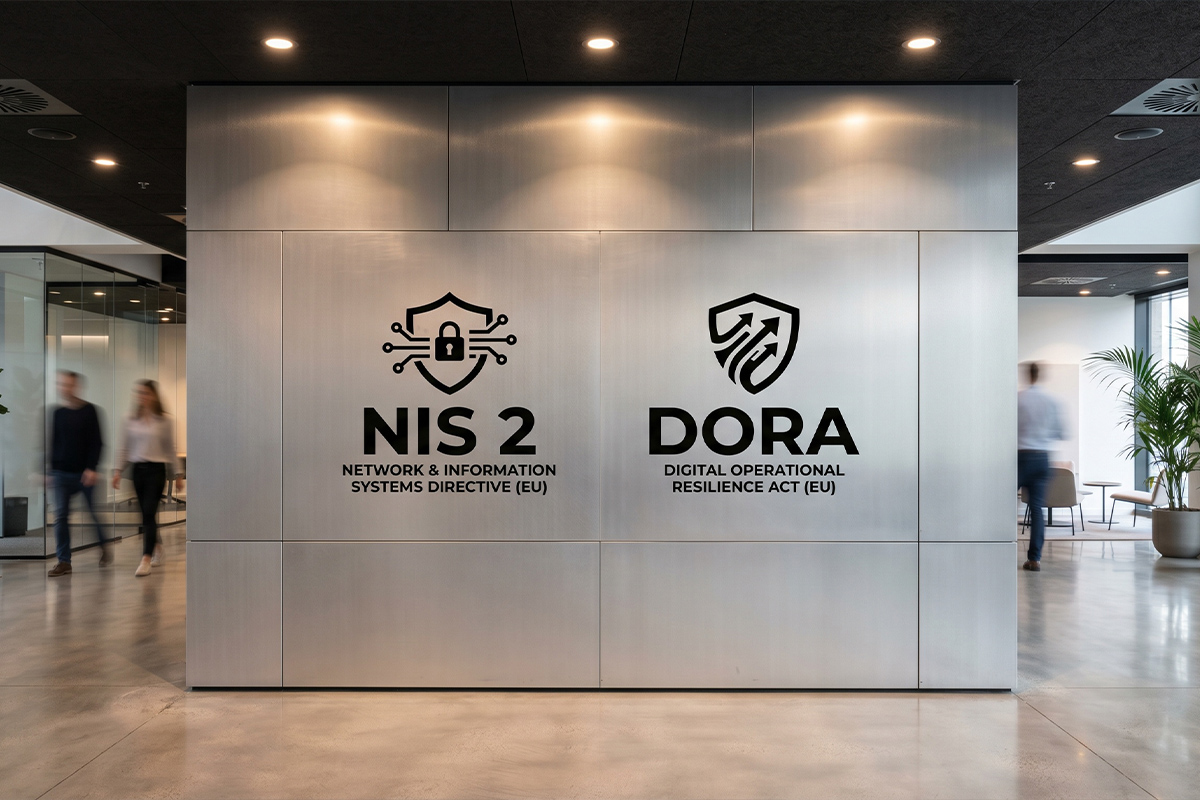
NIS-2 and DORA: What They Mean for Enterprise Networks
NIS-2 and DORA are changing cybersecurity requirements across Europe. Learn what they mean for enterprise networks, risk management, incident response, and secure remote access.




In today’s IT security landscape, VPNs are often labeled as outdated, while Zero Trust is promoted as the future of secure access to corporate resources. However, this comparison oversimplifies the issue.
Although VPN and Zero Trust differ significantly, they are not inherently incompatible. The real question is: Can both approaches coexist effectively within modern IT security architectures?
Table of Contents:
A traditional Virtual Private Network (VPN)is built on the concept of perimeter security. After a one-time authentication - via password, certificate, or multi-factor authentication (MFA) - the user gains access to the internal network. From a perspective of IT infrastructure, the client is then considered “inside” the trusted network.
The model introduces several security challenges:
In the face of modern threats such as compromised endpoints, stolen credentials, and insider risks, this approach is no longer sufficient.
Zero Trust Security is based on a fundamentally different principle: “Never trust, always verify.”
Its key features include:
In a well-implemented Zero Trust architecture, it no longer matters whether a user is physically inside or outside the corporate network. Trust is never assumed - every access request is evaluated independently.
The perceived contradiction arises from the traditional understanding of VPN as an all-or-nothing access solution. In its classic form, VPN grants broad network access after authentication, which appears to conflict with the granular access control principles of Zero Trust.
However, this interpretation overlooks a crucial point:
A VPN is primarily a technology for encrypted communication, not a comprehensive security philosophy.
This misunderstanding disappears when VPN is seen as a secure tunnel rather than a security framework. Even in Zero Trust environments, VPN technology can play an important role in:
What matters most is not the VPN tunnel itself - but how access is controlled after it is established.
When combined with strong identity verification, context-sensitive policies, and fine-grained authorization in a Zero Trust framework, VPN can become a valuable component of a hybrid security architecture.
These capabilities allow VPN to complement and strengthen Zero Trust architectures rather than contradict them.
VPN and Zero Trust represent different approaches but are not opposed concepts. A traditional VPN alone cannot deliver the full security benefits of a Zero Trust architecture. However, when strategically integrated into a broader Zero Trust framework, VPN provides a reliable and practical foundation for secure communication.
Hybrid strategies allow organizations to transition gradually from network-centric security to identity- and resource-based protection models. Eliminating implicit trust is not an overnight process. A mature, well-integrated VPN infrastructure supports this transformation and protects critical transition phases, while continuing to ensure secure connectivity across modern IT environments.
You might also be interested in:
NIS-2 and DORA: What They Mean for Enterprise Networks
NIS-2 and DORA are changing cybersecurity requirements across Europe. Learn what they mean for enterprise networks, risk management, incident response, and secure remote access.
Zero Trust Implementation: Best Practices and Lessons Learned
Zero Trust in Practice: US audits offer organizations clear lessons on network segmentation, data protection, legacy systems, and identity management.
Digital Sovereignty: Regaining Control Over Data, Access and Digital Infrastructure
Digital sovereignty starts with control over your data. Learn how GDPR, the US Cloud Act, data localisation, encryption and secure remote access help organisations strengthen compliance and reduce digital dependencies.
What International Collaboration Really Looks Like
Different Countries. Different Routines. One Team - What International Collaboration Really Looks Like


![[Translate to Englisch:]](/fileadmin/user_upload/NCP_Blog/2026/collage_international_work.png "[Translate to Englisch:]")